Retirement by 58 isn’t a dream. It’s a plan – let’s build yours
How We Funded Our Dream Asia Trip with Credit Card Rewards (2024 Summer Edition)
1/10/20267 min read


If you have kids in school, you’re already well-acquainted with the 'Summer Travel Tax.' Because we’re locked into the most expensive months of the year, an international family trip can quickly spiral from a dream into a significant financial burden. For our family of four flying out of a major hub like Houston (IAH), the retail price for a multi-country Asia itinerary can easily top $15,000.
For a long time, those numbers felt out of reach. But instead of paying retail, we spent a few years playing the long game with credit card rewards. By strategically earning United, American, and hotel points, we were able to leverage the system and turn that massive bill into a reality.
Here is the deep dive into how we navigated the rewards landscape to pull off our three-week Summer 2024 family adventure, starting from our home base in Houston and traveling through Taipei, Shanghai, and Tokyo.
Phase 1: The Long Game (Booking 1 Year Out)
Since our kids are in school, summer is our only window for a major trip. Our goal was to depart the moment the school year wrapped up in late May. The secret to finding award success on such a rigid schedule is two-fold: meticulous planning and early action. We began accumulating our 'point stash' years in advance, ensuring we had the right currency ready when the time came. When the 330-day booking window finally opened, we were ready.
Award tickets for a family of four are rare, but by booking nearly a year in advance, we significantly increased our chances before the summer rush claimed them. To maximize availability and keep costs low, the following legs were booked separately.
Phase 2: Houston to Taipei
We kicked off the trip at IAH, flying to Taipei on EVA Air. While we flew with a world-class international carrier, we booked via the United app using MileagePlus miles—a classic 'sweet spot' for getting high value on a direct route. We used about 270K United miles for this direct flight.
The "Three-Seat" Hurdle: With only three economy award tickets available on our flight, we secured those immediately. However, the elusive fourth seat never appeared, forcing us to pivot our strategy.
The Business Class Pivot: To keep the family together on the same flight, we decided to book the fourth seat in Business Class at 110K miles a bit later. To cover the extra miles required, we transferred Ultimate Rewards (UR) points from Chase to United at a 1:1 ratio. While it cost significantly more miles than economy, it was a "forced luxury" that allowed one of us to enjoy a lie-flat bed on the long haul—making for a much easier start to the trip!
Smart Booking in Taipei: We stayed at an IHG property and booked two adjacent rooms to ensure everyone had space. Because we hold an IHG credit card, we used the "Stay 3, Get the 4th Night Free" benefit. Since this perk applied to both rooms, the points cost for that final night was completely waived for the whole family, slashing our lodging costs by 25% instantly.
Taipei Jiufen
Phase 3: Taipei to Shanghai
From Taipei, we moved on to Shanghai using about 35K United miles for the short-haul flights.
The Logistics: United is excellent for regional travel in Asia because its Star Alliance partners (like EVA Air or Air China) offer frequent connections between Taiwan and Mainland China.
The Hotel Mix: We split our time in Shanghai between IHG and Hyatt. Hyatt points are exceptionally valuable in Asia. The Hyatt Place we stayed at cost just 5,000 points per night felt far more premium than its American counterparts, offering high-end service for a fraction of the usual cost.
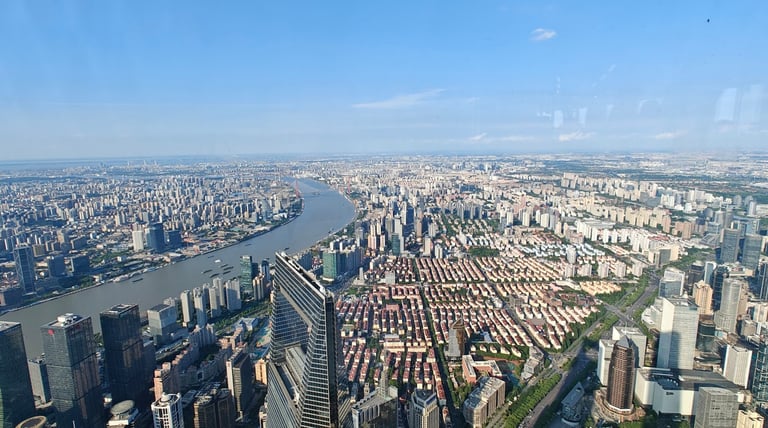
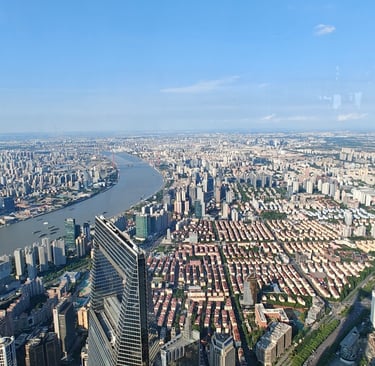
View from Shanghai Tower
Phase 4: Tokyo Disney and a Rare View of Mt. Fuji
After Shanghai, we headed to Tokyo, using about 88K United MileagePlus miles to cover the flight for four of us. This was the emotional peak of the trip for our children—it was their first-ever visit to a Disney park, and the "Disney Magic" hit differently in Japan!
Tokyo Disneyland & DisneySea: We spent two full days immersed in the parks. We chose to visit both Tokyo Disneyland for the classic fairytale atmosphere and Tokyo DisneySea, which is the only park of its kind in the world.
The Budget Win: Even though we couldn't use points for the tickets themselves, Tokyo Disney is a massive "budget win." Due to the favorable exchange rate and Japan's unique pricing model, tickets are significantly more affordable than those in California or Florida.
The Math: While a single-day ticket at Disney World can push well over $150, we paid roughly $55-$60 per person (depending on the day). We paid cash for these, and the savings compared to US prices essentially "paid" for our Disney snacks and souvenirs!
The Hotel: We couldn't find a good points deal here, so we decided to pay cash. We found a hotel near Tokyo Disney for only $120/night. It fit our family of four perfectly and included free shuttles to the parks—a great reminder that paying cash isn't a bad thing when the value is this good.
Tokyo Disneyland Electrical Parade
The "Lucky" Mountain: After Disney, we headed to Mt. Fuji via a Klook day trip. Summer visibility is notoriously difficult due to humidity, so we felt like we won the travel lottery when the clouds parted to reveal the mountain, still dusted with a bit of lingering snow at the top. It was a perfectly peaceful contrast to the non-stop energy of Tokyo.
Fuji Mountain
Phase 5: The Journey Home (Tokyo to Houston)
For the final leg back to Houston, we used about 200K American Airlines (AA) miles for the four tickets.
Strategy: AA miles were a great choice for our flights out of Japan. We secured four seats on American Airlines for the journey home, completing our massive loop around the Pacific and arriving back at IAH.
Cutting the Hidden Costs of Air Travel: Lounge Access
Traveling with a family of four can be exhausting, but the Capital One Venture X was our saving grace. By adding a free authorized user, our entire family of 4 gained access to airport lounges. In cities like Taipei, Shanghai, and Tokyo, the lounges were a major upgrade—offering much better food and amenities than we typically find in the U.S.
Lounge Access: We utilized Priority Pass and Capital One Lounges for the whole family.
The Savings: Instead of spending $80+ on airport meals at every stop, we enjoyed free food and comfortable seating. Over a multi-leg journey, this benefit alone saved us hundreds of dollars.
The Trip by the Numbers and Summary
By leveraging 878,000 points and miles, we transformed what would have been a $15,000+ summer vacation into a really affordable family adventure.
Airline Miles: Our 593K miles across United and American Airlines covered the most expensive part of the trip—long-haul international flights for four during peak season.
Hotel Points: Using 285K points across IHG and Hyatt ensured our stays in major hubs like Taipei and Shanghai were high-quality without the high price tag.
Real-World Value: While these points have a "baseline" value of about $10,000, using them during the summer allowed us to avoid sky-high cash prices, netting us likely $13,000 in total travel value.
At the end of the day, points are just a tool to unlock what matters: watching our kids explore Tokyo and sharing quiet meals in Taipei. By using miles to cover our major travel costs, we kept that cash in our pockets to invest for the future. If we can pull this off for a family of four, you can too. Happy travels!
Appendix Information
How We Get the Rewards Points and Miles
To pull off this trip, we used a "Two-Player" strategy, alternating card applications between my wife and me to maximize our points. Additionally, we leveraged daily spending and business trips to boost our earnings.
✈️ Earning the Miles
United Miles: We earned these through the Chase United Explorer card and by transferring points from our Chase Sapphire Preferred and Chase Ink Cash cards to United.
American Airlines: We secured these by doubling up on the Barclays AAdvantage Aviator Red card and Citi® / AAdvantage® Platinum Select.
🏨 Earning the Hotel Points
IHG: These came from a combination of the Chase IHG Premier and the Chase IHG Business card.
Hyatt: We simply transferred points from our Chase Sapphire Preferred to Hyatt for our hotel stays in Asia.
Tips for Credit Card Rewards
Never Carry a Balance. Rewards cards come with premium interest rates. If you pay interest, you aren't just losing your "free" travel; you're paying a high price for those points. Always pay in full to keep the value in your pocket.
The Referral Double-Dip: Don't just apply for cards separately. One spouse can often refer the other, allowing you to earn a referral bonus on top of the new card's sign-on bonus.
The 2-Year Rule: In many cases, you can earn the sign-on bonus for the same card again if it has been at least 24 months since you last received it.
Earn Them and Burn Them: Don't hoard your points for many years; airline and hotel programs periodically devalue their "award charts," so it’s best to earn your miles and use them quickly to get the most value.
Audit Your Perks: Credit card benefits evolve. On your card's anniversary, audit whether the benefits still justify the annual fee. With changes like the 2026 Venture X lounge policy shift, always ask: "Does this still serve our family’s goals?"